On July 16, 2025, 61-year-old Keith McAllister died after being pulled into an MRI scanner at a Nassau County, New York imaging center. He had entered the scan room wearing a heavy 25 pound metal weight-training chain around his neck. The scanner's strong magnetic field drew him into the bore of the machine. He was hospitalized in critical condition and died the following day.
In April 2026, his family filed a wrongful death suit against the facility. The complaint focuses on the access control protocols at the time of the incident, specifically how Mr. McAllister, who was not a patient, came to be inside the scan room (Zone IV) without first being screened for ferromagnetic materials.
The litigation has not yet reached discovery and we won't speculate about its outcome. Still, the case has already prompted programs across the country to revisit their own screening and access protocols. The legal questions will take months or years to resolve, but the operational questions are ones every program can act on this week.
What Zone IV Is Supposed to Do
The American College of Radiology defines four MRI safety zones. Zone IV is the scan room itself, the space inside the magnetic field. Once you cross that threshold, the magnet doesn't care whether the scanner is mid sequence or idle. It is always on, and it always pulls.
Zone IV access is supposed to be controlled in three layers:
- Physical access control: locked doors, badges, and a designated MR trained staff member physically present.
- Ferromagnetic screening: a documented question and answer pass for every person entering, including family members who are not patients themselves, paired with a handheld or walk through ferromagnetic detector at the door.
- Continuous supervision: the MR technologist, or designated Level 2 personnel, is responsible for everyone in the room and never leaves the door uncontrolled.
When all three layers hold, an accident like this is extraordinarily difficult to produce. When even one fails, whether through a propped open door, a verbal only screen, or a technologist turning their back to set up a sequence, the gap is enough.
What the Case Is Likely to Surface
We won't see the full record until discovery, but the questions a wrongful death case of this shape almost always asks are predictable:
- Who was MR trained at the facility, and was their training current?
- Was there a documented screening for Mr. McAllister before he entered Zone IV?
- Who unlocked the door, and what was the policy for non patient access?
- Was a ferromagnetic detector in use, and was it functional that day?
- What did incident report and near miss logs from the preceding months look like?
These are the same questions every MR program should be able to answer for itself in the next staff meeting, not just the program named in the suit.
Where Workflow Tools Fit
We build AxialProgress for radiology programs, so we'll be honest about what software can and can't do here. A workflow platform doesn't replace a magnet room door, a steel pin frisker, or the discipline of the people running the scanner. What it can do is take the paperwork out of the safety routine so the safety routine actually happens.
Concretely:
- Per entrant screening logs that don't depend on the patient's spouse remembering whether their cousin was wearing a chain three weeks later.
- MR safety training records tied to the badge a person uses to enter the area, not a clipboard at the door.
- Near miss and incident report templates that get out of the way so the technologist files a report in 60 seconds instead of skipping it.
- Audit trails that make it possible to answer the kinds of questions above without reconstructing them after the fact.
These are workflow problems, and they are tractable. But they only matter if the underlying protocol is right and the people running the room have the time to follow it.
What We're Watching Next
The April 2026 complaint is the opening pleading. The questions it raises are not unique to one facility. They are questions about the discipline of an industry wide protocol that has an extraordinarily strong safety record when followed, and an unforgiving failure mode when shortcut.
If you run, manage, or train in an MR program: this is a good week to walk Zone IV with fresh eyes. Look at the door. Look at the FMD. Look at who has the key.
We'll write again as the case progresses.
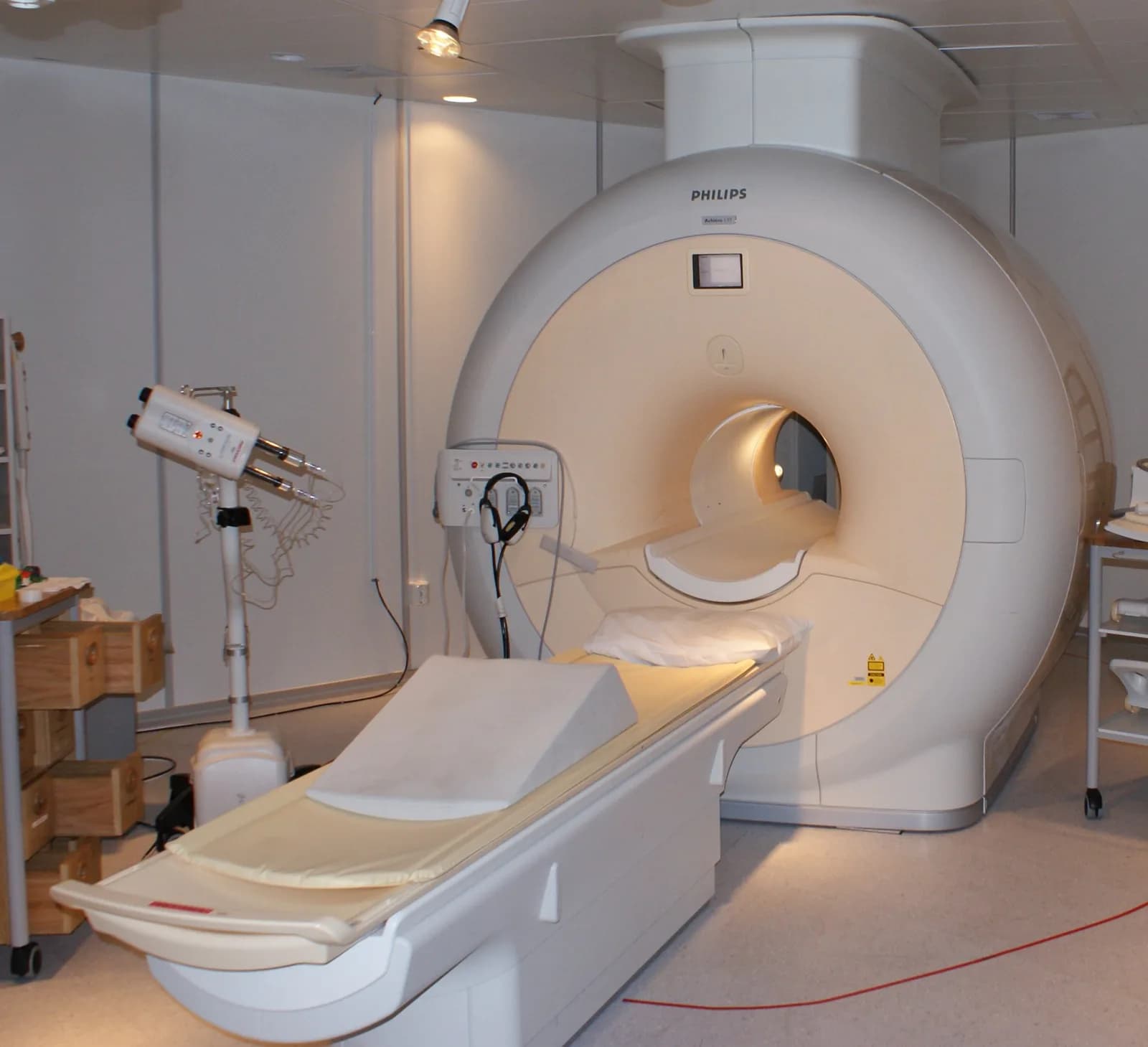
Cover photo: a Philips MRI scanner at Sahlgrenska University Hospital, Gothenburg. Photo by Jan Ainali, CC BY 3.0, via Wikimedia Commons. The pictured facility is unrelated to the events described in this post.
